Showing posts with label walking. Show all posts

Saturday, March 30, 2013

Publication day looms


The author in the Brecon Beacons

 I would like to thank my partner for… providing cheer and company on the walks themselves, and for not complaining – too much – when the weather took a turn for the worse.’ 

Harri Roberts, author, Day Walks in the Brecon Beacons

Can there be anything more exciting than seeing your partner's words in print as his first walking guidebook hits the shelves (figuratively speaking)? To see your own contribution acknowledged in black and white?
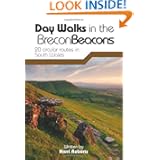
Product DetailsApril 1 marks the official publication day for Day Walks in the Brecon Beacons (although the book has been available to pre-order from publisher Vertebrate and other online book stores for several weeks now). Underneath the thumbnail of the cover and book description on Vertebrate's site, there’s a little bio about Harri, which I’m going to repeat here:

Harri Roberts is a freelance writer, editor and translator based in Newport, Gwent. He has authored a number of Welsh walking guides, including a forthcoming official guidebook to the Wales Coast Path (Amroth to Swansea section). 

His love of the Brecon Beacons developed during research for an ambitious guide to the Cambrian Way, a high-level, Welsh ‘end-to-end’ across some of the most scenic and mountainous terrain in the country.

The trail levels out above Talybont reservoir 
So it’s finally looking as if all the hours of driving, freezing nights huddled in our tiny tent, aching legs and sore feet (plus the long hours confined to the study writing it) have been worth it. 

And just in case you're in any doubt, writing hiking books for a living is a long, mostly uphill struggle. 


I say this with feeling because I’ve been there alongside Harri from the outset and I'd like to believe my small contribution (photography and sandwiches) has gone some way towards helping him fulfill his lifelong ambition. 

To this end, I’ve trekked miles up, down, across and around Wales in sun, wind, rain and drizzle. I’ve been frazzled, frozen, soggy and sunburnt, hungry, thirsty, blistered and just bloody fed up. I've laughed and cried, paddled through icy waters and assisted in freeing countless sheep from barbed wire fences. I’ve ‘lost’ the camera more times than I care to remember, and spent more on bus fares in six years than in my entire previous lifetime.

Occasionally, for practical reasons (like needing to be dropped off/picked up miles from civilisation or a bus route or hiking in particularly difficult terrain like the Rhinogs), Harri has opted to walk alone but those occasions were relatively rare and as publication day of this first book approaches, I wear my hiking writer’s partner badge with pride. 

I've walked the miles, captured the images, earned my title. I've worked hard so that on April 1, I can announce with complete authenticity, 'Today, readers, I'm going to be The Walker's Wife'.

Looking down from Allt yr Esgair
Not that hiking in the glorious Brecon Beacons, with its spectacular peaks and escarpments, gorges, open moorland and peaceful valleys, can really be considered 'work'; rather we've simply been indulging our passion with the promise of a pay cheque sometime in the distance future .

Fortunately, the majority of our Brecon Beacons hiking was done last spring before the jet stream got stuck down south and the mountains were transformed into bleak, verdant bogs. Later, we were glad we'd seized the moment and spent the fine weather exploring trails, footpaths and quiet, metalled lanes.

We hiked some of the most popular spots in the National Park and some of the most remote. We joined a convoy of hikers approaching Pen y Fan from the north ridge (amazingly, we’d managed to forget it was a Bank Holiday weekend) and enjoyed the company of sheep on the isolated slopes of the (confusingly named) Black Mountain.

In early March, just two days after completing the Llanelli Half Marathon (my first ever race of this kind) and sporting rather spectacular blood blisters on the soles of both feet, I was back in the ‘saddle’, scaling a Black Mountains escarpment (Route 6: Castell Dinas and  Rhos Dirion) .

In May, and with the Black Mountains walks done and dusted, we battled against cold winds to complete a ten-miler around Mynyydd Llangatwg and Craig y Cilau (Route 9). 

Llangors Lake: a beautiful setting for bird-watchers
The landscape was always interesting and varied, even for a seasoned Brecon Beacons visitor like me.

The beautifully constructed wooden bird hide on the western shore of Llangors Lake was a wonderful surprise, as was the wooded ridge of Allt yr Esgair (Route 8). In the book, Harri describes the latter as ‘a pure delight, with panoramic views complemented in May and June by a wild profusion of colourful flowers’ . I can sum it up in two words, ‘absolutely stunning’.

The serene Olchon Valley (Route 5), just outside the National Park, is off the well-trodden tourist track but is equally appealing (the valley is now known as the setting for the film Resistance, based on the novel by Owen Sheers) and well worth walking.

Another Black Mountains gem is the 11th century Partrishow Church, with its intricately carved 16th century rood screen and the chilling, faded wall painting of a skeleton holding a scythe, hourglass and spade. 

A rival for Italy's Leaning Tower of Pisa?
A couple of miles away, subsidence in the hillside has caused the tower of St Martin's Church, Cwmyoy to lean precariously like a Welsh Leaning Tower of Pisa. 

One morning, we stumbled upon a field of daffodils, out of place against the wild heather-covered escarpment looming above but uplifting nonetheless.

We wandered among sheep, cattle and horses, along the Roman road of Sarn Helen, sections of Offa's Dyke and behind waterfalls.

Finally, in August and after the wettest summer in 100 years, we finished walking the Brecon Beacons and, for me at least, the hard work was over.

Inevitably, some memories fade as the months pass. But it doesn't really matter because we'll always want spend time hiking across the varied landscape of the Brecon Beacons, book or no book.

An unexpected field of daffodils 


Monday, March 18, 2013

The nature of vertiginous

ver·tig·i·nous  (adjective)
Causing vertigo, especially by being extremely high or steep.


Looking (a long way) down at Paul do Mer, Madeira
Who can forget the iconic shot of a terrified James Stewart dangling from one of San Francisco’s sky scrapers?

The opening scene of Vertigo, which last year toppled Citizen Kane from top rating in the British Film Institute’s Sight and Sound once-a-decade poll, brilliantly illustrates the debilitating effect that a fear of heights can have.

I’m not that keen on high places myself. I've ‘frozen’ at the top of several tall structures, most memorably Barcelona’s still unfinished Sagrada Familia and, closer to home, walking over the top of Newport’s Transporter Bridge (the 242 foot construction usually opens to the public on Bank Holidays).

On a trip to New York, a year or two before 9/11, I quashed my fears and ventured onto the Empire State Building’s observation deck, 86 floors up.  I was terrified and, as a result, later refused to scale the nearby Twin Towers, an opportunity now lost forever.

A hairy section of coast path on Gower
But my real, gut-wrenching, terror in the skies moment was on a roller-coaster ride in Las Vegas . This toe-curling monster was positioned on the very top of the Stratosphere Hotel Tower, which ‘juts 1,149 feet into the Vegas skyline’ (their words).  It took two margaritas before I could step onto the ride and I did the whole two loops with my eyes shut and my mouth open (screaming). It clearly wasn’t terrifying enough for other adrenaline seekers though because, seven years ago, the Stratosphere demolished it to make space for several new rides with names like Insanity and X-scream. I guess that about sums it up.

Hiking in Wales isn't completely without its nerve-wracking moments either, although the official Wales Coast Path does direct walkers away from the hairiest sections. 

Despite all these terror-filled experiences, I don't recall any memorable encounters with the adjective ‘vertiginous’ until our first trip to Madeira in 2007. Browsing through our collection of new holiday walking guides, it wasn’t exactly reassuring to note the frequent scattering of phrases like ‘the way becomes very dangerous [sic], ‘there is a sheer drop’ , ‘Hold on: watch you don’t fall!’ and ‘Some people might find this stretch vertiginous’.

The Madeira archipelago is basically a chain of big underwater mountains, some which rise above the ocean. Although it measures only 35 miles by 22 miles, Madeira’s highest peak – Pico Ruivo – stands at 1861 metres, more than twice as high as Pen y Fan (886 metres) in the Brecon Beacons. The island also boasts one of the highest sea cliffs in Europe – the sheer drop at Cabo GirĂ£o is 570 metres and it’s pretty frightening to stand on the viewing platform looking down at terraced fields and the ocean beyond.

You need a head for heights on the route to Pico Ruivo 
What's even more fascinating is realising there’s more than twice as much Madeira lurking underneath the waves as above them. The cliffs around the island apparently extend to a depth of around 4,000 metres. That’s one big drop.

I share all this because, if you’re looking for a bad attack of vertigo, Madeira’s as good as place as any to head for.
Our first full day’s walking back in December 2007 was one of the most frightening experiences of my life. We'd chosen a walk from Walk Madeira! (by David and Ros Brawn) and the authors judged there to be a vertigo risk of 3 (high) and warned about ‘an unprotected drop’. Hidden half-way through the instructions, one of them had noted ‘the water channel had left the cliff leaving a body-sized slit to drop where I thought the cliff might be’.
Our Sunflower Landscapes book advised readers who considered themselves ‘experts’: ‘ You should manage all the walks easily, provided that you are used to very sheer unprotected drops’.   
It was all there in black and white, the subliminal message being ‘Keep Well Clear’. Except... the concept of danger is cultural and, hailing from a safety-conscious country like the UK, it was impossible to conceive of a dangerous path being accessible to the public. At home, Harri and frequently encounter footpaths that have been diverted/closed due to 'hazards' such as bowing walls or construction work on canal towpaths (experience has taught us to use our own discretion in such circumstances) . The authors of these Madeira guidebooks must be overly-cautious souls, I decided.

By early afternoon, I’d changed my opinion. Madeira was a hairy place to walk; if anything, these Madeira-philes had understated the perils.

A head for heights is necessary on the Levada dos Piornais
As I clung to a cliff overhang on the precipitous Levada dos Piornais, I froze with terror. There was absolutely nothing between the narrow path and a long tumble into the valley below except a rail with a human-sized gap at the bottom. One false move and I’d be doing a bungee jump without the elastic cord. To make things worse, Alanna (then just 12) was hiking with us and, with her youthful exuberance, was bouncing along and relishing the hair-raising experience.  I was expecting her to vanish over the precipice at any moment.

I was right to be concerned. Six months after our holiday, a 61-year-old Belgian woman died on the same levada; two weeks earlier, a woman fell to her death on the Ribeiro Frio – Portela walk. In January 2012, two elderly Danish tourists (women) were found dead below Levada dos Piornais.  

It’s sobering truth that too many hikers die every year, mostly while trekking on high mountain routes. In Madeira, it’s the popular levada paths that people should be treating with trepidation.

At first glance, they look surprisingly easy: level paths weaving their way around the contours of wooded valleys, often with official sign-posting and cafes/bars en route. On the face of it, levada walking offers the opportunity for even the most sedentary of tourists to get close to the island’s natural beauty.

But maybe that’s the 'root' of the problem. The Levada dos Piornais is tantalisingly close to Funchal, to the heavily populated hotel region.  Ribeiro Frio is one of the most visited valleys in Madeira: people take photographs, have something to eat and then look around for something else to do. Too often, they set off for a stroll without considering their fitness levels, footwear and head for heights.

Harri walks one of  Levada Furado's less vertiginous sections
On our latest trip, we witnessed two separate incidents on the vertiginous Levada Furado where the female hiker looked down, ‘froze’ and turned back. They were probably wise to do so as there were considerably more hair-raising sections facing them ahead.

Following the meandering course of a levada is probably one of the best ways to experience the beauty of inland Madeira. Just remember to choose your levada carefully if you don't like heights! 

One last thing, I stumbled upon this brilliantly entertaining blog entry highlighting some of the real (and imaginary) perils one holiday-maker encountered on his levada walk.


Wednesday, March 13, 2013

Birds of a feather

Low tide at Rhossili with Worm's Head in the distance

So Rhossili has been awarded third place in a list of best European beaches.

In a survey of worldwide tourists by TripAdvisor the windswept Welsh beach, popular with families and dog walkers alike, was beaten only by Rabbit Beach at Lampedusa, Sicily, and Playa de las Catedrales in Ribadeo, Galicia, Spain.

In the unlikely event that any reader hasn’t visited Rhossili, this magnificent three-mile stretch of sand lies on the tip of the Gower peninsula.

Thousands visit Rhossili annually to stroll along the beach, surf its waves and splash around in the sea.  As a tourist destination, Rhossili offers everything: miles of white sand, (at low tide) several shipwrecks, a public house, cafes, a National Trust shop, toilets, two small tidal islands and, most important, a large car park.

Two miles to the north, and tucked just behind Burry Holms, lies an equally beguiling stretch of sand but here the similarity ends. 

Whiteford Sands is largely ignored by the crowds
Unlike its buzzing, tourist-friendly, cash-grabbing neighbour, Whiteford Sands has no amenities and requires a ten minute walk from the nearest car park at Llanmadoc. 

Wild ponies graze the mud flats near Whiteford Sands

Our preferred route around Whiteford Point takes a good deal longer but passes some of the Gower’s most contrasting scenery and provides plenty of photographic opportunities, e.g. wild ponies grazing on the mud flats.


Now Rhossili has been crowned one of the top European beaches it’s likely to encourage even greater numbers to explore its attractions, leaving the peace and tranquility of Whiteford Sands to the locals and ‘those in the know’.

It’s the same story in the Brecon Beacons. The National Park's own website claims it is visited annually by ‘some 3.8 million people who spend around 4.2 million days there’.

So are the mountains thronging with hikers, trekking in convoy over the ridges?  The mere thought makes me chuckle.

Last spring and summer, Harri and I completed over 20 walks for inclusion in Harri’s forthcoming book on the Brecon Beacons for Vertebrate Publishing

Most days we saw hardly saw anyone at all, except when we ventured into villages and towns. Occasionally, we might pass a couple of hikers, or even more rarely, a small group of walkers, but more often we had great expanses of Welsh mountain all to ourselves. 

The truth is that the only places in the Brecon Beacons where you can reasonably expect to encounter large groups of walkers are on the well-walked trails leading to the twin peaks of Pen y Fan and Corn Du and in the popular waterfalls area at YstradfellteHike anywhere else in the Brecon Beacons and it’s quite possible, and very probable on drizzly, grey days, that you’ll not pass another person all day. 

That’s right. No-one. Anywhere. There are more sheep than people in this part of Wales. 

I recall watching a television programme several years ago which rated the ‘must-see’ places in the world. No prizes for guessing which large American gorge came top of the list. Tourist after tourist gushed over the Grand Canyon – almost to a person describing it as ‘awesome’ – though few had done much more than gaze across the mile-wide chasm before turning their attention to the man-made attractions which line the cliff top.

Bryce Canyon, Utah with not a cafe or shop in sight
A few months later, we were there ourselves, having first visited the rather more accessible and equally stunning (if far less frequently raved about) Zion and Bryce Canyons in Southern Utah.

‘There’s only so much red rock you can look at,’ Alanna pronounced, at eight clearly unimpressed by this geological monster of nature.

Flicking through an old guidebook recently, I read that almost all visitors to the Grand Canyon visit the South Rim (the hotels, cafes, gift shops, 3D cinemas, etc, are located here) where they spend just 40 minutes of their two-three hour visit looking at the canyon. North Rim is apparently just too far off the beaten track for the majority.

It’s exactly the same story in Madeira, where coach loads of tourists flock to Monte for the toboggan run or to Rabaçal for the waterfalls. Not that either of these places isn't beautiful and well worth seeing, of course, but so is the magnificent and largely deserted high plateau of the Paul do Serra. 

St Ives: the most visited resort in Cornwall
In Cornwall, the big draw is St Ives, where on a rainy day in August, we were hard-pushed to find standing room in a pub. 

In Pembrokeshire, it's St David's that attracts the madding crowds (Harri will never forgive me for having to queue twice in a heaving beer garden for two halves of cider because, as I maintain, ladies don't drink pints!). 

Everyone, it seems, flocks to the same places for no reason other than these are the places that people flock. In our hundreds, we swarm into the pubs, cafes and gift shops that spring up in response to demand, though in some instances the natural landscape is so inaccessible, the commercial landscape now appears to be the main attraction, e.g. Cheddar Gorge, Tintagel. 

It often makes me wonder if humans really are birds of a feather… or just sheep?

 Birds... or just sheep? 

Sunday, October 16, 2011

Don’t turn the spotlight off Wales

Fields in the Rhymney Valley


I groaned inwardly yesterday morning when I heard a Radio 4 presenter refer to rugby as Wales’ national religion. 

Wales so rarely gets a mention on UK radio that it was novel to find my countrymen the centre of attention for several minutes.  It was strangely unsettling, however, to have our national psyche analysed in such a public way and to learn that Welshness hinges on an obsession with an oval ball and the fifteen muscle-bound men who fight over it. 

Alas, we lost the semi-final to France so the Welsh squad is on its way home and this little country of three million people and several times more sheep will once again be forgotten as the spotlight turns back to England.

Okay, the Welsh team might not be playing in the Rugby World Cup final, but the Radio 4 team should know that Wales has an awful lot more going for it than rugby.

Top of the list is the stunning Welsh scenery and, for most people, it’s right there on our doorstep, ready to explore and enjoy without costing a penny.

Today, we decided to stick close to home and walk the lower slopes of Mynydd Machen and the Rhymney Valley.  Leaving my ruck sack behind (Harri carried drinks and a few nibbles), I galloped up the first grassy slope and was soon waxing lyrically about the beauty of the undulating fields surrounded by their forested hills.

It’s an area we walk regularly. We didn’t stick rigidly to Harri’s Walking World route, though we did manage to include his recommended stop at the Cefn Maby Arms.  Amazingly for mid October, it was still warm enough to sit outside with our drinks.  This is what hiking is really all about - you just can't beat a glass of beer or cider after a long, tiring walk.

The highlight of the route for me is always the magnificent Plas Machen farmhouse and the arable fields which surround it. 

Picture 1
The magnificent Plas Machen farmhouse (copyright Newland, Rennie Wilkins)
If I’d been a location scout for Hammer Horror Films back in the fifties and sixties, this is the place I’d have brought Christopher Lee and Peter Cushing for filming.  Even in bright sunshine, there’s something tantilisingly haunting and spooky about the house, which is currently on the market for an undisclosed amount.

Plas Machen was once home to one of the innumerable branches of the Morgan family. Following the renovation and extension of Tredegar House (which itself hosts the scariest Halloween event I’ve ever attended) in the Restoration Period, Plas Machen was abandoned by the family and become a tenanted farmhouse.

I have no idea what the future holds for this beautiful and historic house, but I desperately hope its new owner won’t destroy its faintly gothic facade and that Plas Machen will continue to enthrall (and slightly terrify) future generations of hikers.

Thursday, September 29, 2011

Channel hopping

Looking down towards the Severn Estuary from Portishead
The hot weather’s coming in from India, my 16-year old daughter informed me earlier this week, interpreting the term ‘Indian Summer’ a little too literally.

Whatever. The source of this week’s delightful spell of autumn sunshine is immaterial, the important thing is it’s here and it’s a great excuse to ignore the housework and other home-based tasks and head for the great outdoors.

Once we’ve decided we’re definitely going hiking, the conversation in our house goes something like this:

Harri: So where do you want to go?

Me:    The seaside.

Harri:  What about doing something local? We could walk from the house.

Me:     I want to go to the seaside.

Harri:  I thought you might like to try this new circular walk I’ve read about.

Me:     I wanna go to the seaside.  I wanna go to the seaside.

Harri:  So you’d prefer to go to the coast?

No prizes, then, for guessing that we’ve walked most of the Welsh coastline within two hours’ drive of our home – and we’ve done lots of it several times.

Keen to keep me happy while venturing to new pastures, Harri put on his thinking cap and after extensive research, i.e. checking out our walking bookshelf, he suggested doing the longer loop of the Gordano Round in North Somerset

The route involved a long stretch of coastal walking so I agreed. Unfortunately, there was just one little problem – the walk started in Portishead.

Now, for the past 30 years – and based on the verbal say-so of just one disenchanted former resident – I’ve imagined Portishead to be an ugly and industrial place; somewhere to keep away from at all costs.

I couldn’t have been more wrong and I hereby retract all my previously stated views about it.

Portishead is a lovely place, very reminiscent of Minehead, with the same interesting high street shopping and a magnificent, sweeping esplanade (which we viewed from our higher position on the coast path). 

Like other resorts along this stretch of the Severn Estuary there’s a lot of mud at low tide, but on the whole, it’s a very pleasant coastal town, with a marina, a lake, independent shops, distinctive architecture, and plenty of woodland and green areas.

The stretch of coastline towards Clevedon is much easier on the legs than Amroth–Pendine; it’s also popular with dog walkers so keep glancing down to avoid a close encounter with the squelchy stuff.

During the morning, we got talking to an interesting older man who told us how he’d sold his permanent home in the area some years back to buy a £40,000 camper van, and how, on the night of the purchase, he lay awake in bed wondering, ‘what have I done?’  He’s had a great and varied life since, living in different European countries and enjoying the sort of freedom most people only dream about.

Afterwards, Harri and I pondered the UK’s national obsession with bricks and mortar. The Thatcherite dream of home ownership has blighted millions of lives and condemned many people to mundane (and often badly paid and insecure) jobs for one purpose – to service the massive debt that is their mortgage. Why are we Brits so prepared, so enthusiastic, to sell our lives, our energies, our souls, in return for four walls and a patch of grass?  Anyone selling a camper van?

Staying on the subject of over-priced property and frenetic lifestyles, there was evidence of both in Swiss Valley, a stunningly pretty area near Clevedon, where you take your life in your hands just trying to cross the road.  

Fortunately, crossing the split-level section of M5 motorway in the Gordano Valley was easier, though looking down at six lanes of fast-moving traffic from the high-level footbridge was a teeny bit vertiginous (a good word, that one, and acquired in Madeira where almost every hike is vertiginous). 

Nearing the end of our 15-mile loop, we stopped for a thirst-quenching glass of Aspinal’s cider outside The Black Horse, a drinking hole of the very best kind.

Hiking and cider drinking. Could a more pleasurable way of passing an Indian Summer be known to man or woman?

Sunday, August 21, 2011

Setting Off

Walking as a hobby? What’s it really all about? Why are some people passionate about heaving a rucksack onto their backs, lacing up muddy old boots and putting one foot in front of the other for mile after mile (after mile) while others – like a former colleague of mine – shudder at the thought and insist that walking is ‘boring’?

I’ve always walked a lot. When I was growing up in the 1960s and ’70s we didn’t own a car. I was such a Buddha of a toddler that my baby sister was in great peril whenever I sat, elevated above her, in my little pram seat. It seemed far safer to keep me at pavement level. So I walked – pretty much everywhere. In those days we shopped locally but by the time I was six or seven I’d happily walk into town centre (a mile and a half) and back again. 

Walking with my dad at weekends was fun. We’d stop at the newsagents where he’d buy a bag of boiled sweets and then challenge us to make each sweet last as long as possible – the strenuous efforts of our legs were forgotten as we concentrated hard on not crunching sherbet lemons.

Fast forward to high school where I was possibly the most uncool teenager who has ever lived on this planet. My obsession with Mario Lanza and Kathryn Grayson aside, I simply saw every outing as a potential expedition and dragged friends all over the place in search of a true hiking experience. Not that I had any outdoor gear – or any notion that packing a map, some water and provisions, even a coat, might be a good idea.

My usual ploy was to persuade some unsuspecting classmate to set off in high-heeled wedges, knowing all along that I had some vague distant destination in mind. Not surprisingly, these forays into the great outdoors usually ended in harsh words and tears, with the other girl informing me that this was the last time she went anywhere – and she meant anywhere – with me.

Life continued in pretty much the same vein for decades. Just ask my daughters about the pre-Christmas lunch walk they were forced to do a few years ago back.

Then a miracle happened. Four and a half years ago, I met Harri at work. We became friends and when, one day, he asked me if I wanted to go for a yomp that weekend, I knew I’d finally found a kindred spirit.

We walk a lot. We walk on fine days and we walk in bad weather. We do long-distance challenge hikes and shorter walks. We’ve walked the Pembrokeshire Coast Path, much of the South West Coast Path and most of the Cambrian Way. We’ve done circular routes around Cardiff and Bristol and hiked in Madeira, Portugal and southern and northern Spain.

Now it’s me who complains about exhaustion, hikes that go on forever and sore feet. You see, he’s far worse than me. Worse than I ever was. Really. He’s obsessed with hiking. And he can seemingly walk forever.

For us both, to be alive is to hike and I hope this blog will inspire others to share our passion.