Showing posts with label Rhinogs. Show all posts

Sunday, June 1, 2014

Backpacking in hot weather

The balmy days of summer are few and far between in the UK
When you live in Wales (or Britain, come to that) you tend to get used to walking in miserable conditions - snow, sleet, hail, fog, torrential rain. Our wonderful, constantly changing climate means that even the Met Office can't get it right most of the time. You get a forecast for a warm, sunny day, set off in sunshine and end up soaked through a few hours later.
Harri and I have had some dreadful experiences over the years; we've shivered and dripped our way up and down Wales and around the South West Coast Path. During one unforgettable summer trip to the western tip of Cornwall, we walked from St Ives to Sennen in the heaviest rain imaginable. The coast path had become a raging torrent around our feet and the rain and wind was relentless (unsurprisingly, we only passed two other hikers all day and they looked as miserable as us!).
Three years ago, Harri tackled the Rhinogs in weather that was so bad I was fearful for his safety (yes, you've guessed it... in August!). When I finally picked him up near Harlech hours later, he was so cold we had to have the car heating turned up high.
Locked out in the rain at Ilston, Gower
My point is that in the UK we're so busy expecting (and preparing for) the worst possible weather that we rarely pause to consider the likelihood that it might end up being hot and sunny.
On our recent trip to the Somerset Levels, it was really blustery but the sun was so strong that we both managed to burn our lips. Had we been hiking in Europe, or the States, we'd have stocked on up lip salve with UVP but it didn't cross our minds that we'd need protection from the sun here in the UK, in May.
When it gets too hot  there's only one thing to do... find water and JUMP IN!!
When it gets too hot there's only one thing to do... find water and JUMP IN!!
Hot weather hiking requires an altogether different mindset so who better to ask for some pointers than someone who lives in central Texas, where summer temperatures can reach the high 90s Fahrenheit. Joseph is an avid kayaker, who works for Austin Canoe and Kayak (ACK.com) so he's got plenty of experience of staying safe in the sun while still having plenty of fun.
So, while I sit here dreaming of another summer like 1976, it's over to Joseph.
"When you think about summer hiking, you probably imagine the blistering sun beating down, dusty soles edging on hot rock, snakes rattling from the bushes, and shimmering mirages off in the dusty distance. And yet, these thoughts aren’t all that far from the precautions one must take when considering a desert hike or during the summer months. Important things to consider on your hike are the conditions of the trail, staying hydrated, wearing adequate clothing and carrying helpful gear, as well as the possible dangers of exposure and fatigue when it’s hot outside. Consider the following points when you’re planning your next summer hike.
Enjoying the heat in Setubal, Portugal

Proper planning 

The first point of your logistics should be to tell someone you’re going for a hike. Tell them when, where, for how long and swap contact names and numbers for all those in the party. Prepare an emergency plan. Hiking as a pair or as a team is not only safer, but sharing the experience is more fun. Make sure you research your proposed route and any contingency plans. Take note of any potable water points or permanent streams and lakes as these may become useful in the event you exhaust your water supply.
Know your terrain. Sometimes it’s best to make sure the members of your team are of similar ability, but in the case of a family group or multi-experienced team, pace yourselves to accommodate the lowest level of experience in your party.
Check the weather before you go. This will help you to plan more effectively for possible severe events, even though it’s good to pack a rain jacket anyway. In more mountainous terrain, the weather is increasingly unpredictable and so too the likelihood of being caught in a thunderstorm, especially during the summer months and even in the desert.
A rare hot day in the Brecon Beacons (Harri on Pen Cerrig-calch)

Stay hydrated

The most important personal factor to consider when planning a warm weather hike is proper hydration. If you are hiking uphill and in full midday sun you can lose up to two quarts of fluid an hour, not to mention the essential electrolytes you are losing during this time as well. Be sure to pack an appropriate sized water bladder, a handheld water bottle, and a water purifier (tablet, bottle attachment or pump) if you’re going to hike for a long period of time. This will allow you to collect water from the natural resources along your hike such as streams lakes and pools. Note that long slimmer bottles pack more easily than shorter bulkier ones.

Clothing 

When packing clothing, be sure to carry proper attire for all expected inclement weather. You need to be prepared for thunderstorms, hail, and even 30-40 degree drops in temperature.  You should wear layers and pack extra pieces you may need. A sweat-wicking under layer, mid layer for morning and evening, and a rain jacket to protect against wind and rain. If you have room in your pack, it’s nice to have a third outer, warm layer in case darkness falls during your journey. You should also pack a hat or bandana and sunglasses in order to shield yourself from the intense sun.
Clothes
However hot it is, always carry extra clothes for sudden weather changes

Footwear

Wear appropriate hiking boots and be sure they have adequate tread, can lace up tight, and fit properly. If they are too tight or loose, you can develop blisters and actuate poor circulation. High-topped hiking boots can also help protect your ankles through cactus and snake terrain. If you’re planning a trip with a few hikes, or a particularly long hike, and you’re thinking of purchasing new boots, it’s a good idea to break them in for at least two to three weeks prior. A tip to help minimize friction inside your boots and prevent blisters or hotspots forming is to wear two layers of socks. Wear a thin under-layer made from a material that helps wick moisture away from your foot and a second thick outer-layer sock to provide good support and cushioning. The friction will be mitigated between the two layers of socks and reduce any potential hotspot on your foot.

Selecting the proper pack

When selecting your pack, it’s best to consider the length of your hike and the personal items you’ve decided to pack including your water, food, extra clothing layers, first aid, and emergency kit. Typically a good size pack for a day hike is anything between 20-30 kilograms and will depend on how much water and food you need and whether you are carrying items for others (in the case of a dad or team leader). It’s important to make sure the pack is positioned on your body correctly, with the weight placed predominantly on the hips. Also consider packing the backpack properly by distributing the weight evenly. This will help you to save energy on the hike and eliminate a shifting load.

Bring the proper gear 

It’s important to pack anything you may need in the lightest way possible. You should bring a headlamp to be contingent on a late arrival time. Make sure to have sunscreen, bug repellant, extra batteries for your headlamp, a first-aid kit, a flint fire starter, and a GPS device or a map.
About the Author:
Joseph is an avid kayaker based out of the central Texas area. He has spent many a weekend and holiday on the Texas coast attending sea kayaking events or just having some fun with a kayak or paddleboard. He’s currently employed at Austin Canoe and Kayak (ACK.com) and loves that he gets to spend time working with his favorite toys.

A refreshing dip in a shallow stretch of the River Monnow... but never jump into deep, cold water


Saturday, March 30, 2013

Publication day looms


The author in the Brecon Beacons

 I would like to thank my partner for… providing cheer and company on the walks themselves, and for not complaining – too much – when the weather took a turn for the worse.’ 

Harri Roberts, author, Day Walks in the Brecon Beacons

Can there be anything more exciting than seeing your partner's words in print as his first walking guidebook hits the shelves (figuratively speaking)? To see your own contribution acknowledged in black and white?

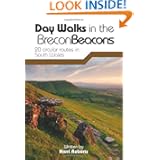
Product DetailsApril 1 marks the official publication day for Day Walks in the Brecon Beacons (although the book has been available to pre-order from publisher Vertebrate and other online book stores for several weeks now). Underneath the thumbnail of the cover and book description on Vertebrate's site, there’s a little bio about Harri, which I’m going to repeat here:

Harri Roberts is a freelance writer, editor and translator based in Newport, Gwent. He has authored a number of Welsh walking guides, including a forthcoming official guidebook to the Wales Coast Path (Amroth to Swansea section). 

His love of the Brecon Beacons developed during research for an ambitious guide to the Cambrian Way, a high-level, Welsh ‘end-to-end’ across some of the most scenic and mountainous terrain in the country.

The trail levels out above Talybont reservoir 
So it’s finally looking as if all the hours of driving, freezing nights huddled in our tiny tent, aching legs and sore feet (plus the long hours confined to the study writing it) have been worth it. 

And just in case you're in any doubt, writing hiking books for a living is a long, mostly uphill struggle. 


I say this with feeling because I’ve been there alongside Harri from the outset and I'd like to believe my small contribution (photography and sandwiches) has gone some way towards helping him fulfill his lifelong ambition. 

To this end, I’ve trekked miles up, down, across and around Wales in sun, wind, rain and drizzle. I’ve been frazzled, frozen, soggy and sunburnt, hungry, thirsty, blistered and just bloody fed up. I've laughed and cried, paddled through icy waters and assisted in freeing countless sheep from barbed wire fences. I’ve ‘lost’ the camera more times than I care to remember, and spent more on bus fares in six years than in my entire previous lifetime.

Occasionally, for practical reasons (like needing to be dropped off/picked up miles from civilisation or a bus route or hiking in particularly difficult terrain like the Rhinogs), Harri has opted to walk alone but those occasions were relatively rare and as publication day of this first book approaches, I wear my hiking writer’s partner badge with pride. 

I've walked the miles, captured the images, earned my title. I've worked hard so that on April 1, I can announce with complete authenticity, 'Today, readers, I'm going to be The Walker's Wife'.

Looking down from Allt yr Esgair
Not that hiking in the glorious Brecon Beacons, with its spectacular peaks and escarpments, gorges, open moorland and peaceful valleys, can really be considered 'work'; rather we've simply been indulging our passion with the promise of a pay cheque sometime in the distance future .

Fortunately, the majority of our Brecon Beacons hiking was done last spring before the jet stream got stuck down south and the mountains were transformed into bleak, verdant bogs. Later, we were glad we'd seized the moment and spent the fine weather exploring trails, footpaths and quiet, metalled lanes.

We hiked some of the most popular spots in the National Park and some of the most remote. We joined a convoy of hikers approaching Pen y Fan from the north ridge (amazingly, we’d managed to forget it was a Bank Holiday weekend) and enjoyed the company of sheep on the isolated slopes of the (confusingly named) Black Mountain.

In early March, just two days after completing the Llanelli Half Marathon (my first ever race of this kind) and sporting rather spectacular blood blisters on the soles of both feet, I was back in the ‘saddle’, scaling a Black Mountains escarpment (Route 6: Castell Dinas and  Rhos Dirion) .

In May, and with the Black Mountains walks done and dusted, we battled against cold winds to complete a ten-miler around Mynyydd Llangatwg and Craig y Cilau (Route 9). 

Llangors Lake: a beautiful setting for bird-watchers
The landscape was always interesting and varied, even for a seasoned Brecon Beacons visitor like me.

The beautifully constructed wooden bird hide on the western shore of Llangors Lake was a wonderful surprise, as was the wooded ridge of Allt yr Esgair (Route 8). In the book, Harri describes the latter as ‘a pure delight, with panoramic views complemented in May and June by a wild profusion of colourful flowers’ . I can sum it up in two words, ‘absolutely stunning’.

The serene Olchon Valley (Route 5), just outside the National Park, is off the well-trodden tourist track but is equally appealing (the valley is now known as the setting for the film Resistance, based on the novel by Owen Sheers) and well worth walking.

Another Black Mountains gem is the 11th century Partrishow Church, with its intricately carved 16th century rood screen and the chilling, faded wall painting of a skeleton holding a scythe, hourglass and spade. 

A rival for Italy's Leaning Tower of Pisa?
A couple of miles away, subsidence in the hillside has caused the tower of St Martin's Church, Cwmyoy to lean precariously like a Welsh Leaning Tower of Pisa. 

One morning, we stumbled upon a field of daffodils, out of place against the wild heather-covered escarpment looming above but uplifting nonetheless.

We wandered among sheep, cattle and horses, along the Roman road of Sarn Helen, sections of Offa's Dyke and behind waterfalls.

Finally, in August and after the wettest summer in 100 years, we finished walking the Brecon Beacons and, for me at least, the hard work was over.

Inevitably, some memories fade as the months pass. But it doesn't really matter because we'll always want spend time hiking across the varied landscape of the Brecon Beacons, book or no book.

An unexpected field of daffodils 


Tuesday, June 26, 2012

Rope Bridges


The coastal rope bridge at Carrick-a-Rede, Antrim, Northern Ireland 
We writers like to think of ourselves as versatile, so when I heard about Caerleon Arts Festival’s comic poetry competition, I decided I should have a go.

My entry was very hush-hush (I know one of the judges) and – I thought – not a bad effort for someone who hasn’t attempted to write poetry of any kind since university.

Harri liked my poem very much, but wondered if it was maybe a little elitist, i.e. he thought that few, if any, on the panel of judges would understand the feeling of absolute exhaustion (mental as well as physical) when faced with yet another peak to climb. In essence, he doubted whether they would grasp the exciting concept of a system of rope bridges across Wales!

Alas, he was right - I wasn't even short-listed. I am, however, determined to publish my first-ever comic poem so, for all you hikers who wish there was some way to make the mountains a little easier, here it is:

Rope Bridges

If there’s one thing that hikers hate – yes, even more than stiles –It’s conquering the highest peak for miles and miles and miles

Then spotting just across the vale, another bloody cairnAnd knowing that the only route is down then up again.

But wait, I think there is a way to salve those weary feet A nifty little rope bridge ‘twixt where the high points meet.

Starting with the Beacons, Snowdonia, Pen y Fan,Rope bridges are Wales’ future – our all-inclusive plan.

The Rhinogs, Cambrian Mountains, Carneddau, Cadair Idris
Just sway your way from A to B and hike above the abyss.

You’ll need a head for heights it’s true; perhaps Glyndŵr’s nerve.When faced with sheep or goats, a bull, it’s wiser not to swerve.

The all-Wales coast path beckons, those heathered trails drop deepRope the gaps between the cliffs ‘cause tourists don’t do ‘steep’.

From Rhyl to Aberdovey, Mwnt to Pembroke DockTransform the landscape, add the ropes, keep hikers off the rock.

The plan solves unemployment. No job? Then plait a bridge.What skills are more transferable than linking ridge to ridge?

Think of it, one climb a day, the tough bits done and dusted.Yet a question still remains, can suspended ropes be trusted?

Brecon beacons cattle might appreciate a few rope bridges 


Saturday, August 27, 2011

Rainy Rhinogs

The stunning Barmouth estuary


It’s been a strange week.

Our plan was to head up to Barmouth for the second time this month so Harri could continue his seemingly endless hike along the Cambrian Way and I could meander happily in the foothills of the Rhinogs getting hopelessly lost among the brambles and bracken.

The reality couldn’t have been different. This being Britain and the middle of the summer holidays, we were rained off again.

It could have been worse, I suppose. It could have been a replay of our trip to north Wales two weeks ago when it rained for days on end. To anyone who has never been there, Barmouth is a stunningly beautiful place. The view from the wooden viaduct across the mountain-lined Mawddach estuary is up there with the Grand Canyon in my opinion.

Unfortunately, the weather in this lush land of hills and vales was anything but Arizonian and the magnificent rocky Rhinogs were shrouded in low-lying cloud and dense rain most of the time.

Harri bravely battled the elements in an attempt to complete a one-day hike in appalling weather conditions but even the most passionate of hikers eventually has to call it a day when he’s soaked to the skin and visibility is non-existent.

A couple of thousand feet below in Barmouth it drizzled relentlessly and not even a bag of fudge could lift my plummeting spirits as I wandered aimlessly around the town's delightfully quirky shops trying to kill time.

Looking down towards the Irish Sea
So with memories of being cold, wet and miserable still fresh in our minds, we took heed of the BBC weather forecast and decided to forego our mid-week jaunt to north Wales. 

Harri has been working flat out on various freelance projects while I’ve been decorating and running (I managed a personal best of 11.8 miles this week – thanks again to walkjogrun  which I now see as my personal trainer).

Plan B is to head back to Barmouth and some half-decent hiking when the children go back to school next week – the weather will undoubtedly improve then, it always does.